






QualMeeting Enables Travel-Free Research
Based in Montreal, qualitative research firm Sylvestre Marketing focuses on helping companies understand the cultural differences between English-speaking Canada and French-speaking Canada. Clients with a national product often come to Sylvestre when they want to determine the best ways to market the product to both audiences, says Pascal Patenaude, senior moderator/researcher at the company.
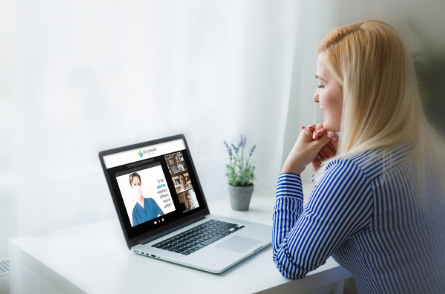
For more than a decade, Sylvestre has offered both online and in-person research, but the company’s text-based online research has always eliminated the body language, facial expressions and initial reactions that are a part of one-on-one interviews. Recently, while working with a client testing a new cereal product, Sylvestre tried QualMeeting for the first time in an effort to virtually gain the benefits of live research. In a recent conversation with Patenaude, we discussed his experience.
What prompted your interest in using QualMeeting for qualitative research?
Patenaude: We’ve been using the 2020 QualBoard for a couple of years, and probably a year and a half ago, I watched a QualMeeting seminar. I was impressed with the product, and I was just waiting for the right client to come along so we could use it. When this particular client came along, the Canadian marketing team had never used QualMeeting, but their U.S. marketing team had been using it for a couple of months and loved it. So the Canadian team came to us looking for a research firm that could use an online product like that. Sometimes we have trouble getting clients to use online research and we have to convince them of its merits, so it was nice that this client was already convinced before they even came to us.
Why was QualMeeting a good fit for this project?
Patenaude: The client was insistent on doing one-on-one interviews, and QualMeeting was the perfect solution because we were able to conduct the interviews one-on-one, but I didn’t have to travel across the country to do it. Also, we were able to see the interviewees in their home environment; it was a more natural environment than sitting in a focus group facility somewhere.
[Because the respondents were speaking in French and the client needed research in English,] we used a simultaneous translator on the phone. The client could see firsthand [how the interviewee reacted] and hear the responses by using an interpreter.
From the respondents’ points of view, they liked not having to travel and being able to do the interviews in their own homes. A few smokers, for example, were able to grab a smoke while we were talking. They didn’t have to change their demeanor because we were doing this. I think it allowed us to get a more natural response. Of course, some people weren’t as comfortable online, so my assistant contacted them ahead of time to walk them through it.
How did you structure the research with QualMeeting?
Patenaude: The interviews were 45 minutes long, and we were able to schedule three per block before taking a 30-minute break to refresh the program. We had two conference lines going, one between myself and the interviewee, and then the clients were listening in on another line through the interpreter. After we were finished, the folks at QualMeeting linked the translation with the video, so our client can go back to the tapes and view them whenever they want to. They are posted indefinitely in a format similar to YouTube.
What role does online research play in the work you do?
Patenaude: I’ve been in this industry for more than 12 years, and I remember in the early 2000s, everybody talked a lot about online research and how it was the wave of the future. But it took 10 years for clients to get on board with it. Now the word is out, and clients are more interested.
In our RFPs now, we are offering online research only or a combination of online and live research. And we’re using online a lot more. I tell clients that we have two facility rooms: one traditional and the second virtual. Currently, 20 percent of our business is online, but that’s growing.
For our clients, online research gives them the benefit of bringing people from across the country together. I can moderate from Montreal and go off the beaten path. If we’re doing live research, it’s usually just in the three large urban centers: Toronto, Montreal and Vancouver. QualMeeting enables us to test outside of the traditional urban centers.
As an example, I tell clients, if you want to test the entire province of Quebec, Montreal isn’t representative of the entire province. If you go outside Montreal and the product works in smaller areas, it will work in Montreal. But if you test only in Montreal and the product works here, it won’t necessarily work in smaller cities. We can hypothesize it is the same for Ontario and out west. QualMeeting allows me to go out into other areas easily to conduct interviews, and to be able to see the people I’m talking to, their body language and initial reactions, which are very important for qualitative research.